
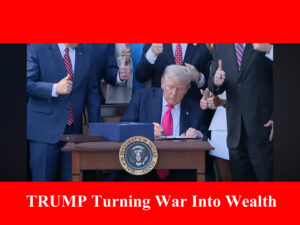
In an era of global uncertainty, few narratives are as striking as that of Donald J. Trump’s recent diplomatic-and-economic push in the South Caucasus, as emblematic of a new paradigm: turning conflict into commerce, and war-zones into wealth-zones.
A New Kind of Peace-Deal
On August 8, 2025, in the East Room of the White House, President Trump welcomed Ilham Aliyev (President of Azerbaijan) and Nikol Pashinyan (Prime Minister of Armenia) to sign a landmark agreement: the two nations pledged to end decades of conflict, open trade and transit, and respect each other’s territorial integrity
What makes this deal especially remarkable is what lies beneath the diplomacy: a commercial corridor linking Azerbaijan with its exclave of Nakhchivan through Armenian territory — to be developed under U.S. participation, with American business and infrastructure at its core.
From Conflict to Corridor: Commerce as Strategy
Rather than posing as a purely humanitarian or diplomatic feat, the framework leans heavily into economics: trade routes, infrastructure, energy pipelines, fiber-optic lines. The agreement grants U.S. firms exclusive developmental rights to the strategic transit zone — a clear link from peace-process to profit-process.
In short: war + stalemate → agreement → transit-route → economic opportunity.
The Bigger Picture: “Ended Wars, Created Wealth”
President Trump has made bold claims: that he has “ended eight wars in eight months.” The veracity and scope of those claims are contested. Regardless, the Armenia-Azerbaijan deal is one of the most tangible instances where diplomacy and commerce converge under a single strategic umbrella.
For MYDENTALWIG’s audience — creative entrepreneurs, trend-watchers, and those curious about how business and geopolitics intersect — this moment is fertile with lessons:
- Conflict as launchpad: Where there is friction, infrastructure can follow. The very thing that kept the region locked in tension (closed borders, contested routes) now becomes the site of investment.
- Branding peace as product: The transit corridor has been dubbed the “Trump Route for International Peace and Prosperity.” The deal blends geopolitics and branding.
- Global business strategy through diplomacy: U.S. firms don’t just benefit from peace; they help craft it. The shift from guns to rails, oil to data, creates new value chains.
- The ripple effect: If war zones can flip to “wealth zones,” then the mindset of business-as-usual shifts. How many other conflicts might become commercial corridors tomorrow?
What It Means for Business & Innovation
For an audience invested in growth, innovation and staying ahead of trends:
- Think about infrastructure ecosystems — not just the product you sell, but the route you deliver it by.
- Consider the geopolitical dimension of your market: a stable route opens more than a new highway; it opens new supply-chains, partnerships, and possibility.
- Embrace branding of big ideas — naming deals, corridors, routes gives them narrative, attention, and momentum.
A Cautionary Note
It’s important to acknowledge that while the agreement is historic, many analysts caution that “ending wars” is a complex claim. Some of the conflicts cited remain unresolved or fragile. The Armenia-Azerbaijan accord is promising, but its long-term success will depend on implementation, local buy-in, and sustained follow-through.
Final Thought
“TRUMP Turning War Into Wealth” isn’t just a flashy headline — it signals a shift. A shift where the heavy machinery of war is replaced by the heavy machinery of commerce; where cease-fires give way to contracts; where the map of conflict becomes the map of connectivity.
For MYDENTALWIG readers: the key takeaway is this — opportunity often lies where others see only rubble. Building the future means seeing the function in scenarios that seem broken, and then turning them into value.