
Can AI Truly Understand Humans Without Understanding Ingestion?
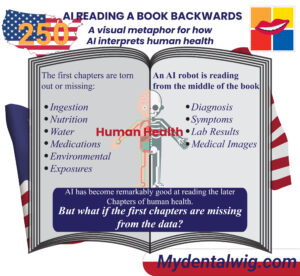
Artificial intelligence has made remarkable progress. It can analyze medical images, summarize scientific literature, detect patterns in massive datasets, and even generate treatment recommendations. Some experts believe AI will eventually surpass human intelligence across nearly every domain.
But there is a fundamental question that deserves more attention:
Can AI truly understand human health if it doesn’t understand what enters the human body?
Today’s AI systems learn from enormous amounts of data:
- Text
- Images
- Videos
- Audio
- Sensor data
These data sources have fueled extraordinary advances. Yet they share a common characteristic: they primarily describe outcomes rather than inputs.
Medical records document diseases after they develop. X-rays reveal damage that has already occurred. Blood tests measure the body’s response. Clinical notes describe symptoms. Even wearable devices mostly capture physiological consequences such as heart rate, sleep, movement, or glucose levels.
What is often missing is a continuous, structured understanding of the biological inputs that came first.
Every day, the human body receives thousands of external influences:
- Food
- Water
- Nutrients
- Medications
- Supplements
- Environmental chemicals
- Toxins
- Food additives
- Contaminants
These inputs interact with genetics, metabolism, hormones, the immune system, and the microbiome before eventually producing measurable health outcomes.
In other words, there is an entire biological layer that frequently remains fragmented, inconsistent, or absent from the datasets used to build healthcare AI.
This distinction matters.
If AI primarily learns relationships such as:
Symptoms → Diagnosis → Treatment
it may become exceptionally good at recognizing disease.
But if AI could also understand:
Ingestion → Biological Response → Physiological Change → Symptoms → Diagnosis → Outcome
it could potentially become far better at prediction, prevention, and personalized healthcare.
The difference is profound.
Today’s healthcare AI often explains what happened.
Tomorrow’s healthcare AI will be able to explain why it happened.
This is not an argument that AI cannot become extraordinarily intelligent.
Rather, it is an argument that intelligence is constrained by the information available to it.
No matter how advanced an AI becomes—even if it can create new algorithms—it remains constrained by the information and feedback available to it about the world it is trying to understand, meaning that it can only learn from the data it receives.
If one of the earliest biological layers—the ingestion layer—is incomplete or poorly structured, then every downstream prediction may also be incomplete.
One of the greatest opportunities in healthcare AI is not building larger models.
It is building better data.
Current AI may achieve extraordinary reasoning capabilities, yet healthcare AI remains fundamentally constrained by the quality and completeness of the data it receives. If the ingestion layer is systematically underrepresented, AI will tend to model the consequences of biology more effectively than the biological processes that precede them.
As AI continues transforming medicine, one question may become increasingly important:
Have we spent decades teaching AI about the consequences of human biology while overlooking one of its most fundamental beginnings?
That question may shape the next generation of precision healthcare.